Best UAE Free Zones by Business Activity

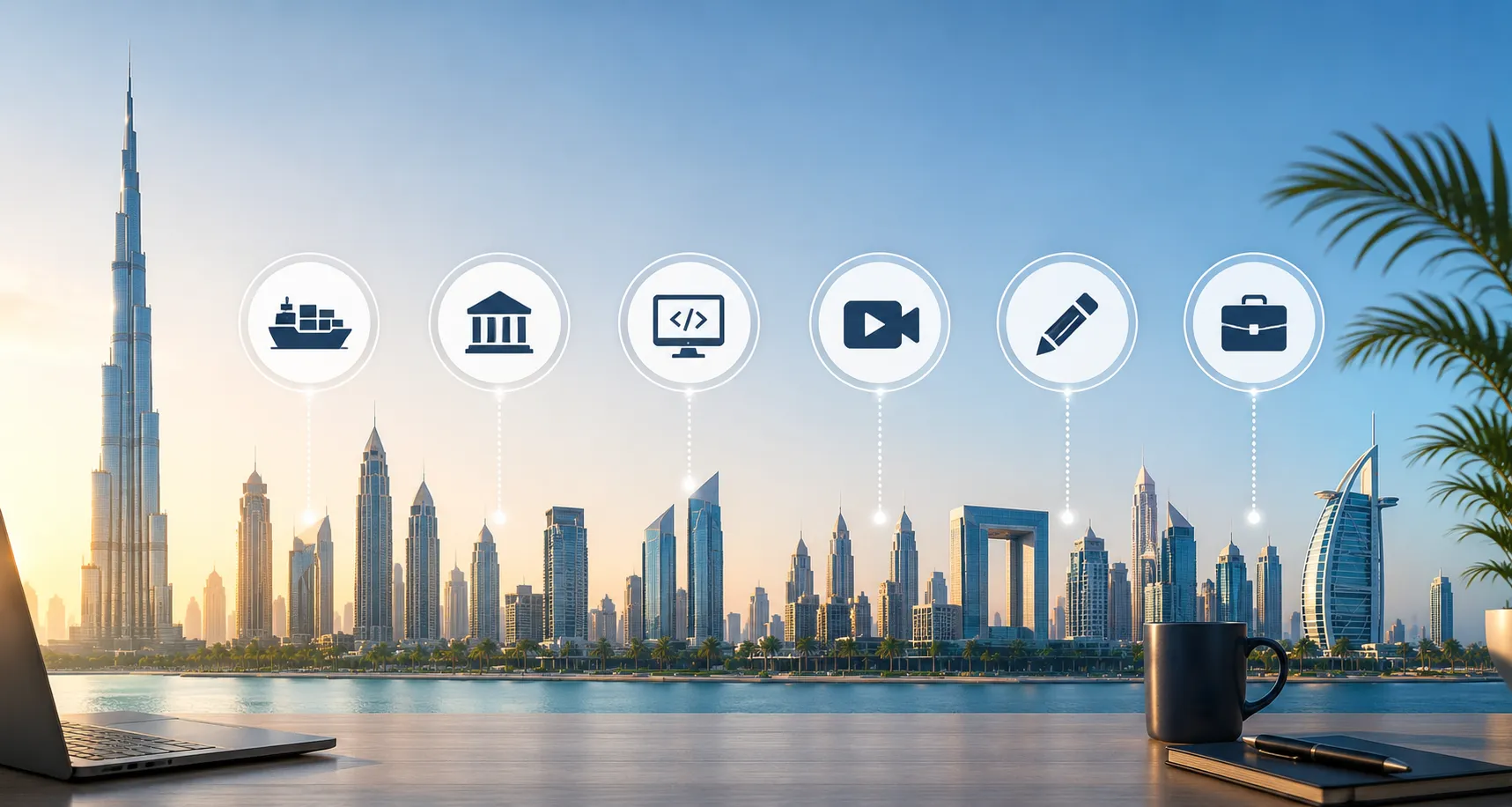
- Free zones are generally built around specific sector clusters, trade and logistics, finance, technology, media, or general commercial activity, and choosing one aligned to your sector often brings relevant infrastructure and networking advantages
- DMCC and Jafza remain among the largest and most established zones for trading, commodities, and logistics businesses, with Jafza hosting thousands of companies including major global firms
- DIFC and ADGM are the standard choice for regulated financial services, operating under independent common law frameworks distinct from the rest of the UAE
- General-purpose, lower-cost zones like IFZA and Meydan serve consultants, freelancers, and digital businesses that don't need sector-specific infrastructure
The right UAE free zone depends heavily on your specific business activity: DMCC and Jebel Ali Free Zone (Jafza) suit trading and logistics, DIFC and ADGM suit financial services, Dubai Internet City suits technology companies, Dubai Media City suits media and content businesses, and IFZA and Meydan offer broad, low-cost options for consultants, freelancers, and general professional services. With more than 30 free zones across the UAE, each built around a specific sector focus and infrastructure advantage, matching your business activity to the right zone can meaningfully affect both setup cost and long-term operational fit.
Trade, Logistics, and Commodities
Jebel Ali Free Zone (Jafza): Established in 1985, Jafza is the oldest and largest free zone in the UAE and the wider Middle East and North Africa region, built around Jebel Ali Port, one of the busiest ports globally, and connected to Al Maktoum Airport. The zone hosts more than 7,000 firms, including over 150 Global Fortune 500 companies, making it a natural fit for businesses needing serious trade and logistics infrastructure. Today, with nearly 11,000 companies in Jafza and AED 620 billion facilitated in trade annually, the zone remains central to Dubai’s position as a leading global trade and business hub. Jafza offers licences in trading, general trading, service, industrial, logistics, and e-commerce, serving core sectors including healthcare, travel and logistics, automotive and spare parts, FMCG, petrochemicals, food and agriculture, retail and e-commerce, and electronics and technology.
DMCC (Dubai Multi Commodities Centre): Widely recognized for commodities trading, particularly precious metals, diamonds, and agricultural commodities, DMCC also hosts a large and diverse base of general trading, consulting, and technology companies, making it one of the most versatile large free zones in Dubai.
Dubai Airport Free Zone (DAFZA): Located near Dubai International Airport, DAFZA hosts companies across electronics, pharmaceutical, engineering and building materials, aerospace and aviation, and logistics sectors, making it well suited to businesses needing proximity to air cargo infrastructure.
KIZAD (Khalifa Industrial Zone Abu Dhabi): KIZAD offers competitive free zone setup packages and benefits from its location between Abu Dhabi and Dubai, making it a strong option for industrial and manufacturing businesses seeking a central UAE location.
Financial Services
DIFC (Dubai International Financial Centre): The primary destination for regulated financial services in Dubai, operating under English common law and regulated by the Dubai Financial Services Authority (DFSA). DIFC is the standard choice for forex brokerages, asset managers, fintech companies, and wealth management firms requiring the credibility and regulatory infrastructure of an internationally recognized financial free zone.
ADGM (Abu Dhabi Global Market): Abu Dhabi’s equivalent to the DIFC, similarly built on common law principles and regulated by the Financial Services Regulatory Authority (FSRA), offering a comparable regulatory environment for financial services businesses preferring an Abu Dhabi base.
Al Maryah Free Zone: A newer financial free zone in Abu Dhabi that focuses additionally on commodities trading and physical delivery, as well as Islamic finance and Islamic banking, offering a more specialized alternative for businesses in these specific financial niches.
Technology and Media
Dubai Internet City (DIC): Positioned as Dubai’s technology hub, DIC is the natural home for software companies, IT firms, and digital agencies, offering proximity to a dense cluster of established tech companies and startups within the same ecosystem.
Dubai Media City (DMC): Purpose-built for media and content businesses, including photographers, filmmakers, content creators, PR agencies, and marketing companies, offering infrastructure and a professional community tailored to media production and distribution.
Dubai Design District (D3): Focused on fashion, design, and creative businesses, offering a specialized environment for companies in these creative industries distinct from the broader media or general commercial zones.
General-Purpose and Low-Cost Zones
IFZA (International Free Zone Authority): IFZA provides local and international businesses with flexible residency visa packages and a wide range of office solutions from its headquarters at Dubai Digital Park. Business owners can choose from more than 2,000 business activities across Professional, Commercial, and Industrial licence types, with foreign incorporated companies also able to register a branch. IFZA offers single and multi-year free zone business licences, with a choice of up to three free business activities in every licence, making it one of the most flexible and cost-effective options for consultants, freelancers, and general service businesses.
Meydan Free Zone: Meydan Free Zone caters primarily to commercial, consulting, investment, and administrative sectors, offering trade licensing and company formation services suited to a broad range of professional and consulting businesses.
Ajman Free Zone: Ajman Free Zone focuses on four key sectors: education, food and beverages, advanced technology, and health and beauty, offering a lower-cost alternative for businesses in these specific sectors while remaining relatively close to Dubai and Sharjah.
Hamriyah Free Zone (HFZA): HFZA offers investors the opportunity to open a company across six diverse sectors: oil and gas, industrial manufacturing, Food Park, maritime industry, Global Logistics Park, and Accelerator Hub, appealing to industrial and manufacturing businesses seeking sector-specific infrastructure outside of Dubai proper.
Free Zone Comparison by Business Activity
| Business Activity | Recommended Free Zones |
|---|---|
| Trading and logistics | Jafza, DMCC, DAFZA |
| Financial services | DIFC, ADGM, Al Maryah Free Zone |
| Technology and software | Dubai Internet City |
| Media and content | Dubai Media City |
| Design and creative | Dubai Design District (D3) |
| General consulting and freelancing | IFZA, Meydan Free Zone |
| Industrial and manufacturing | KIZAD, Hamriyah Free Zone |
| Education, F&B, health and beauty | Ajman Free Zone |
Why Free Zones Continue to Grow in the UAE
According to the UNCTAD World Investment Report 2024, the UAE ranked second globally in greenfield FDI project announcements in 2023, with 1,323 new projects, a 33 percent increase from the previous year, while FDI inflows rose 35 percent to reach $30.688 billion. This sustained investment growth has reinforced continued expansion and specialization across UAE free zones, as each zone competes to attract specific industry clusters through tailored infrastructure, licensing flexibility, and sector-focused business communities.
How to Choose the Right Free Zone
Match your sector to zone specialization where possible: Businesses in trading, finance, technology, or media generally benefit from the infrastructure, networking, and credibility advantages of a zone built specifically around their sector, even if a cheaper general-purpose alternative exists.
Weigh cost against sector fit for general businesses: Consultants, freelancers, and general service businesses without a strong sector-specific need often find zones like IFZA or Meydan offer the best combination of cost, flexibility, and setup speed.
Consider location relative to clients and partners: Zones closer to major airports, ports, or business districts may carry a cost premium but offer genuine logistical advantages for businesses with frequent client meetings or physical goods movement.
Confirm activity list compatibility: Not every free zone licenses every business activity, so confirming that your specific intended activity is available, and permitted in combination with any secondary activities, before committing to a zone avoids later complications.
Our Take
Choosing the best UAE free zone for your business activity comes down to matching your sector to a zone’s specialization, trading and logistics businesses toward Jafza or DMCC, financial services toward DIFC or ADGM, technology toward Dubai Internet City, media toward Dubai Media City, and general consulting or freelance work toward flexible, lower-cost options like IFZA or Meydan. With more than 30 free zones across the UAE, taking the time to align your specific activity, budget, and location needs with the right zone’s infrastructure and licensing scope pays off in both setup efficiency and long-term operational fit.
This article is for informational and educational purposes only and does not constitute legal or business advice.
Frequently Asked Questions
