UAE Free Zone Business Guide: Setup, Benefits, and Costs

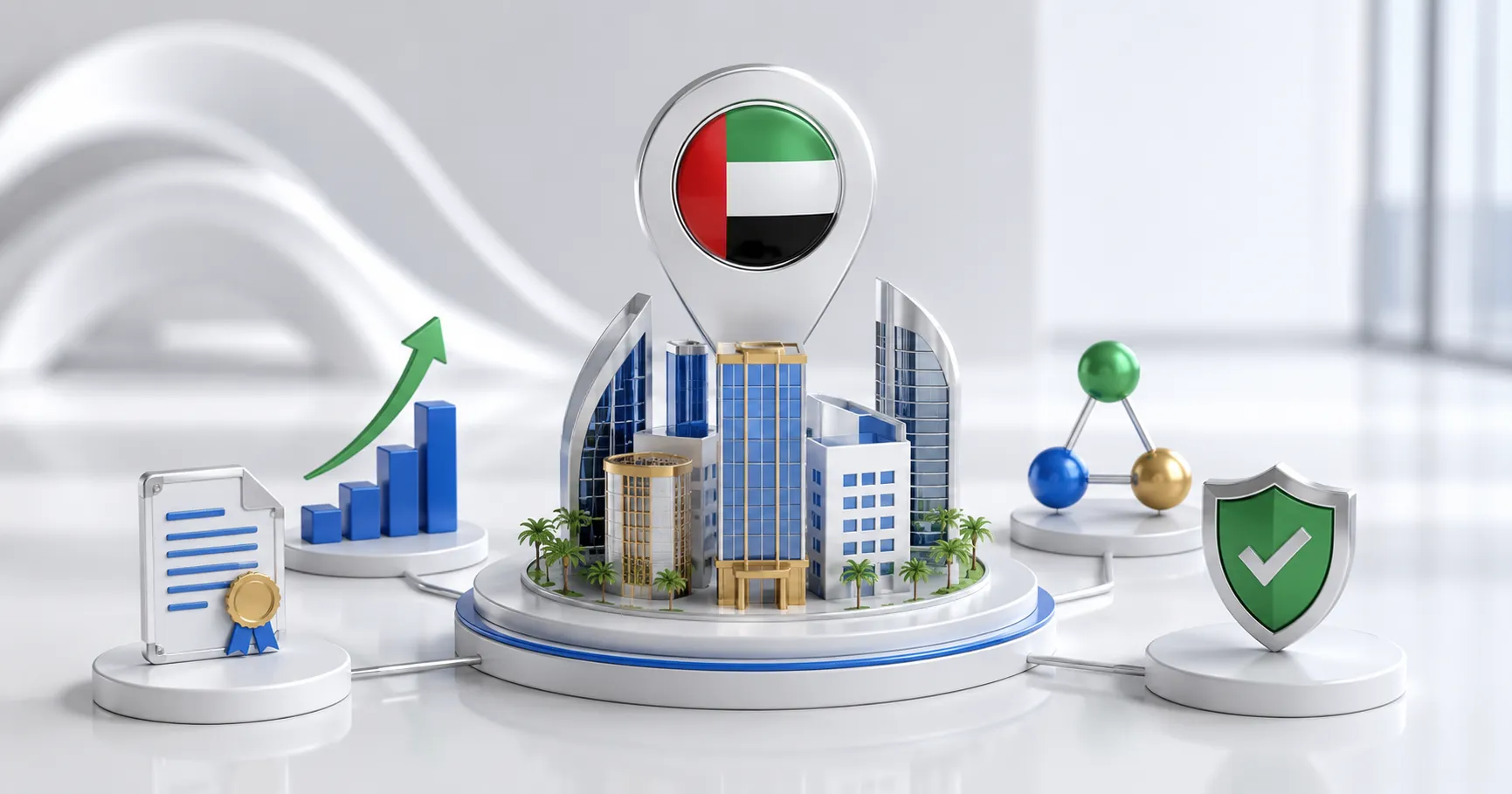
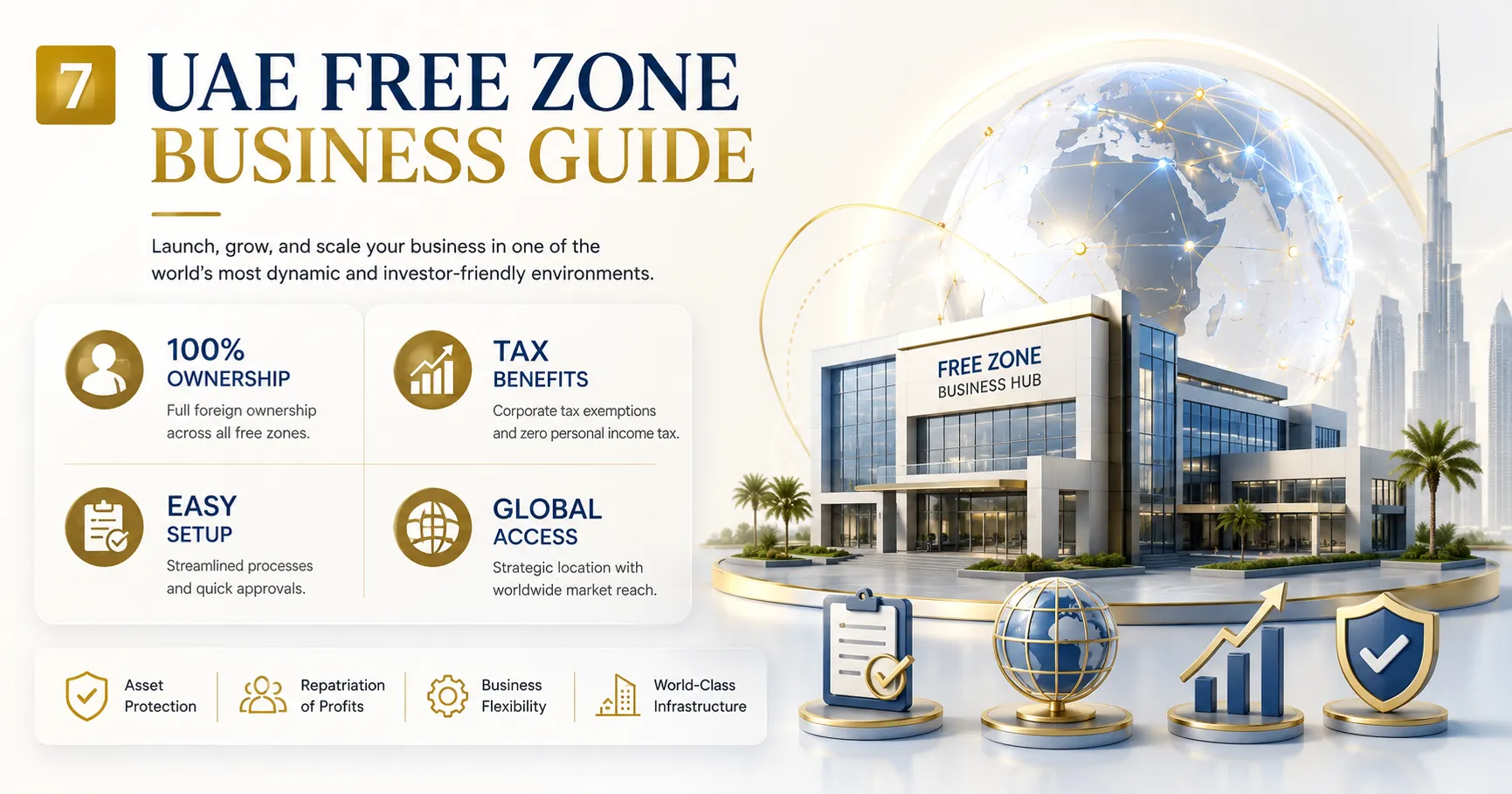
- UAE free zones offer 100% foreign ownership, zero personal income tax, zero import/export duties, and full profit repatriation to foreign investors
- Over 45 free zones across Dubai, Abu Dhabi, Sharjah, Ajman, RAK, and other emirates - each with a specific industry focus and own licensing authority
- Free zone companies cannot directly trade with UAE mainland customers without a local distributor or separate mainland license
- Qualifying Free Zone Persons (QFZPs) can access 0% corporate tax on qualifying income under specific substance and compliance conditions
UAE free zones are designated economic areas offering foreign investors 100% business ownership, full profit repatriation, tax incentives, and streamlined licensing processes. There are over 45 free zones across the UAE, each with a specific sectoral focus, from media and technology to finance, healthcare, logistics, and crypto. This guide explains how free zones work, the key advantages and limitations compared to mainland setup, how to choose the right zone, and what the real costs look like.
How UAE Free Zones Work
A free zone is a geographic or virtual area within the UAE that operates under its own regulatory framework separate from the mainland. Each free zone has its own licensing authority, its own visa allocation system, and its own set of permitted activities. Key structural features: 100% foreign ownership (no local Emirati sponsor or partner required), full profit repatriation (100% of profits and capital can be transferred out of the UAE), zero import/export duties within the free zone itself, simplified setup (most free zones complete licensing in 1-5 business days digitally), and no personal income tax.
Free Zone vs. Mainland: The Critical Difference
The most important limitation of a free zone company is its inability to trade directly with the UAE mainland market. A free zone company can operate internationally and invoice global clients, trade with other free zone companies, provide services to multinational companies with UAE offices, and hold investments, IP, and assets. A free zone company cannot, without additional steps, sell directly to UAE mainland consumers or businesses without a mainland distributor, or open commercial retail premises on the UAE mainland. Many free zone businesses that want mainland UAE market access either appoint a local UAE distributor/agent or establish a separate mainland LLC in addition to their free zone entity.
Major UAE Free Zones by Sector
| Free Zone | Location | Primary Focus |
|---|---|---|
| DIFC (Dubai International Financial Centre) | Dubai | Banking, finance, law, professional services |
| ADGM (Abu Dhabi Global Market) | Abu Dhabi | Finance, fintech, investment management |
| DMCC (Dubai Multi Commodities Centre) | Dubai | Commodities, crypto, gold, general trading |
| Dubai Internet City (DIC) | Dubai | Technology, IT, digital services |
| Dubai Media City (DMC) | Dubai | Media, content creation, advertising |
| Dubai Healthcare City (DHCC) | Dubai | Healthcare, medical services, wellness |
| Jebel Ali Free Zone (JAFZA) | Dubai | Logistics, manufacturing, import/export |
| RAKEZ (Ras Al Khaimah) | RAK | Manufacturing, trading, services (low-cost) |
| Ajman Free Zone | Ajman | General trading, services (lowest cost) |
Corporate Tax in Free Zones
The UAE’s 9% corporate tax (effective June 2023) applies to all UAE businesses including free zone companies, but Qualifying Free Zone Persons (QFZPs) can access a 0% rate on qualifying income. QFZP conditions (all must be met): adequate substance within the free zone (staff, premises, decision-making presence), qualifying income from free zone activities and transactions with foreign persons or other QFZPs, compliance with UAE transfer pricing rules, audited financial statements regardless of revenue, and de minimis cap: non-qualifying income must not exceed the lower of AED 5M or 5% of total revenue. Failing any one QFZP condition causes the entire entity to lose the 0% rate for that tax year.
Typical Free Zone Setup Costs
Premium zones (DIFC, ADGM): license fees USD 12,000-35,000+ annually; physical presence typically required; best for regulated financial services, law firms, investment managers. Mid-tier zones (DMCC, DIC, DMC): license fees AED 15,000-35,000 annually; flexi-desk options available; best for technology, consulting, crypto, trading. Low-cost zones (RAKEZ, Ajman, Fujairah): license fees AED 6,000-15,000 annually; virtual office options available; best for freelancers, solopreneurs, cost-sensitive startups. Government fees and immigration add establishment card, visa fees (approximately AED 5,000-7,000 per visa), and medical/Emirates ID fees.
Our Take
UAE free zones offer a compelling business setup environment for international businesses and entrepreneurs: 100% ownership, zero personal tax, full profit repatriation, and a vast choice of specialized zones covering every major industry. The critical discipline is selecting a zone whose sector focus and mainland trading restrictions match the actual business model – a free zone company that cannot sell to its primary market has a fundamental structural problem regardless of its tax efficiency.
This article is for informational and educational purposes only and does not constitute legal or business advice. Free zone regulations and costs change regularly. Always consult a licensed UAE business setup advisor and qualified legal counsel.
Frequently Asked Questions
